

What happens when we don’t need each other?
But I asked YOU!


“I don’t know, ask ChatGPT.”
“But I asked YOU.”
“But I don’t know anything about college application essays.”
“But I’m your wife!”
“Ughh. Fine.” (Types the question into ChatGPT, reads what it says)
Fight escalates 😡
—
This scene played out three times before I finally got the message. Nadia wasn’t looking for the most accurate answer. She wanted MY answer.
Always available, never annoyed
Two weeks ago, I was packing for a long week in Madison. I was leading a corporate AI training session, meeting with the Dean and hosting my MBA students for our in-person weekend.
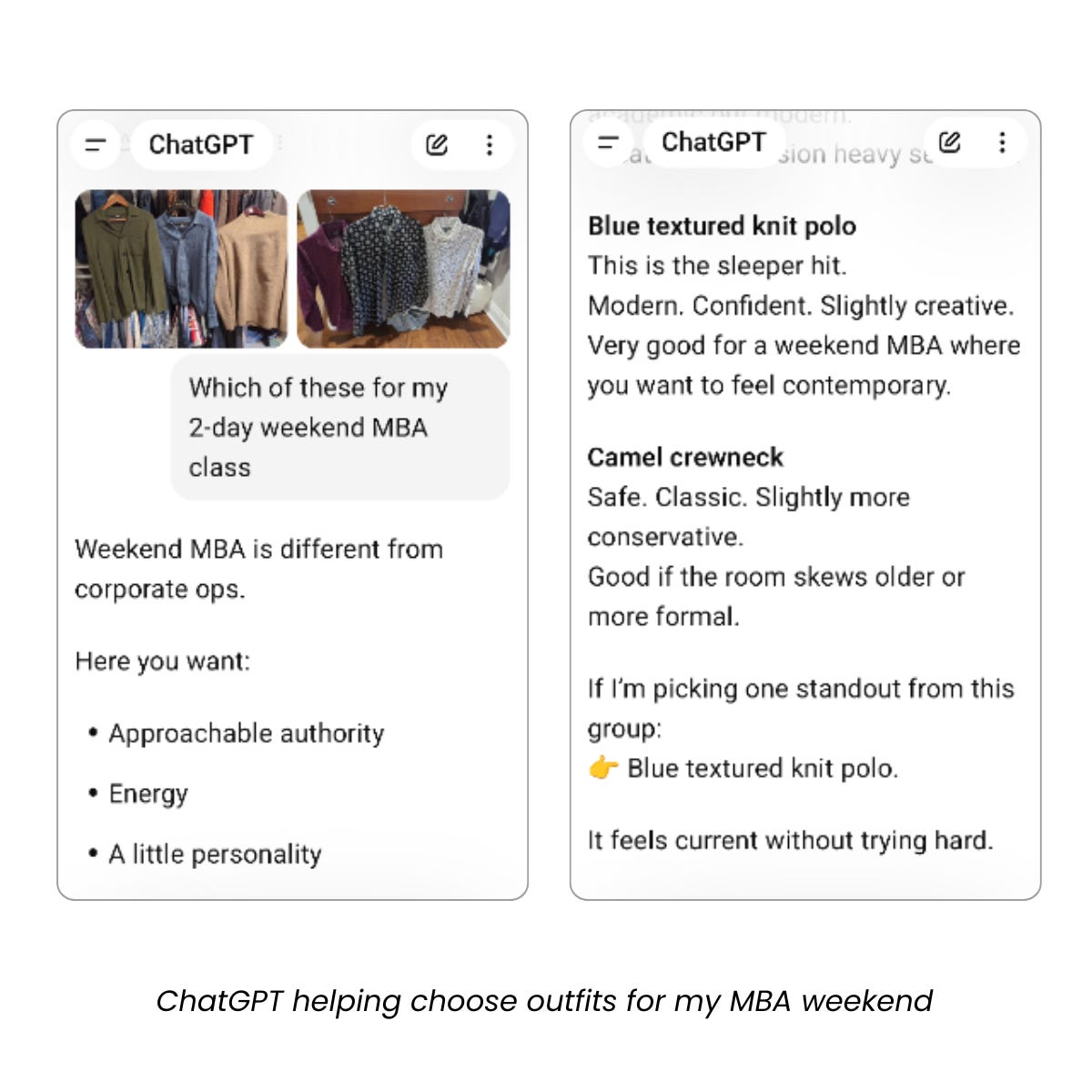
I have the fashion sense of a colorblind monk, so Nadia usually buys my clothes, and helps me pick outfits.
But she was busy, so I spent 30 minutes with ChatGPT. I took pictures of outfits, told it what I was doing each day, and it gave me advice on every scenario. It never got frustrated, even when I asked dumb questions about socks and belts.
Not sure how to fix your toilet and don’t feel like calling Dad? Ask AI. Confused about a contract clause and don’t want to bother your buddy who’s a lawyer? Ask AI. Need advice on a sensitive email but don’t want to get into the hairy details with a colleague? Ask AI.
AIs are always available, happy to help and never judge.
Asking other people means being vulnerable and interrupting someone who’s busy. But when you call your dad about the toilet, you end up talking about the kids. When your colleague helps rewrite an email, you end up swapping stories about office politics.
We aren’t just getting help. We’re giving someone a reason to be part of our life.
When our entertainment was each other
When I was a kid, every summer day, I’d hop on my bike and ride over to a friend’s house. My buddies and I would spend all day playing basketball, D&D and goofing around.
This was the 1980s. We didn’t have the internet. So we relied on each other.
Then, one at a time, technology gave us other options. TV moved us off the front porch. Social media kept us in the loop. Google put the world’s information at our fingertips.
Each of these removed a reason to reach out. And things that are optional often fade.
In the 1970s, American households hosted friends 15 times a year. By 2000, it was eight. Today, 57% of Americans report being lonely, and the Surgeon General declared loneliness a public health epidemic.

Now AI is taking away another reason to connect: asking for help.
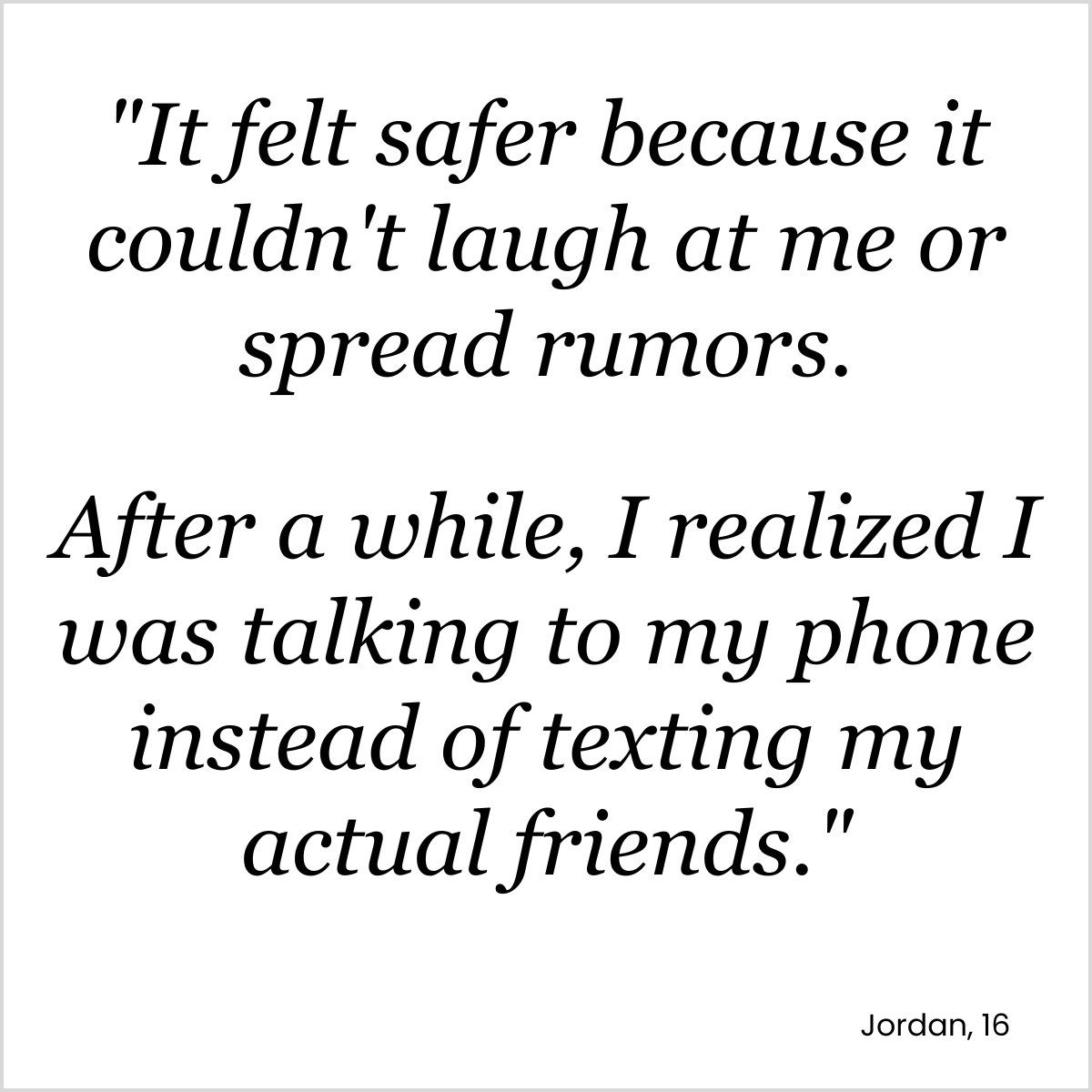
Common sense media found that a third of teenagers have discussed important issues with AI instead of people. And 31% found those conversations as satisfying as talking with real friends.
It’s not always about the answer
When I took up Ironman, people told me to get a coach. A coach?! I’m a fifty-something weekend athlete, not a pro.
I was wrong. Our weekly calls were filled with chats about wetsuits, nutrition, and pacing. Craig told me things I didn’t know to ask, like how to manage training volume and what the heck dry needling is.
Five years later, I know most everything I need, and AI could handle the rest. But when I had a bad race last December, Craig didn’t just review my splits. He helped me compare one bad race against five years of training.
It turns out that when technology makes the human version of something optional, people choose it anyway.
People predicted the internet would kill travel agents. Instead, travel agency sales outpaced the overall market in 2025, with younger customers driving growth. And there are 2.3 million waiters and waitresses in America, a number that’s risen every year since covid despite restaurant kiosks, self-checkout and DoorDash.
Will they still call (er text) us?
As I was writing this week’s edition, my daughter texted me asking for feedback on her resume. I gave her a bunch of advice. And it was good advice!
Then I asked Claude. It gave great advice, and then rewrote her entire resume on the spot. 🤦
She was grateful, but I wasn’t sure how to feel. I was glad that she asked and happy to help, but a bit deflated.
Some uneasy questions crept in: What if next time she asks Claude instead of me? And if Claude is better, would I want her to keep asking me?
I think I would. I’m not the best with feelings and emotions, so I often relate to my kids by helping them. And while AI may have the right answer, I hope she’ll still want MY answer.
Dad Joke: I asked ChatGPT to pick out a belt for my outfit. It said “that’s a waist of my time.” 😭