

Walmart’s Not-So-Secret AI Agents
Bringing AI to main street

At a Glance: Walmart has launched a bold AI strategy built around four super agents that support customers, employees, sellers, and developers. Agents are advanced digital assistants that aim to enhance shopping, streamline operations, and make Walmart’s vast scale feel personal. The move positions it in a race against Amazon, Google, and ChatGPT to become your go-to shopping assistant.
Retail at Walmart Size: No Small Feat
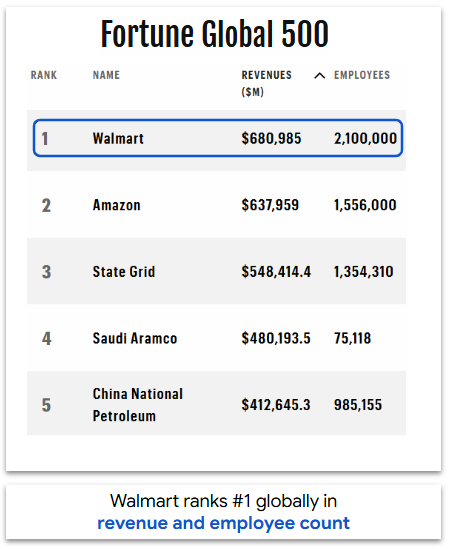
Sam Walton opened his first store in 1962 with a simple promise: “We Sell for Less.” Today, Walmart generates $685 billion in revenue, employs 2.1 million people, and runs a logistics network of 15,000 truck drivers logging over a billion miles per year.
But this size creates complexity. Manually updating descriptions for 400 million products or providing customer service for 255 million weekly shoppers is like trying to mow the lawn with a pair of scissors.
Retail is fiercely competitive. Walmart disrupted department stores like Sears in the 1980s, and Amazon returned the favor in the 2000s. CEO Doug McMillon has been blunt about the company’s past missteps: “There was a period …when we didn’t take it [e-commerce] seriously enough.” Today, there’s no such hesitation. AI is a top priority.
So… What’s an Agent?
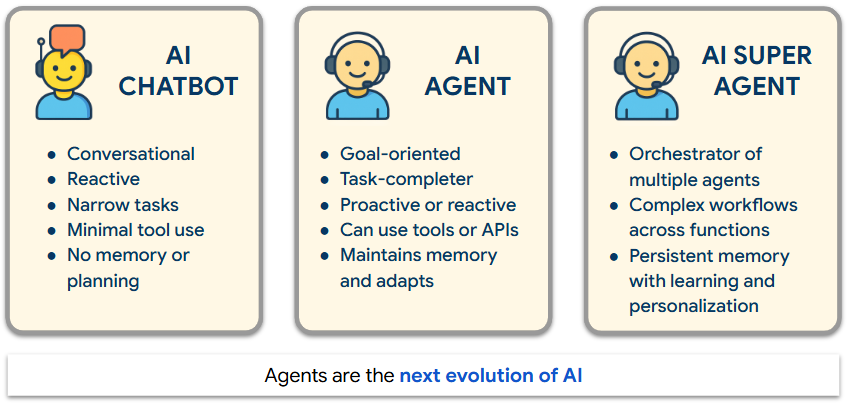
Imagine you’re hosting a dinner party. Instead of spending hours shopping, you tell your AI agent “Plan a Mediterranean-themed dinner for eight people, budget $200.” It builds a grocery list, finds the best deals, adds everything to your cart and schedules delivery, freeing you up to focus on the atmosphere and guest list.
Nvidia CEO Jensen Huang declared 2025 “the age of AI agents”, calling them “the new digital workforce.” Unlike chatbots that just answer questions, agents actually take action by turning AI outputs into steps and working with other agents to get things done. Think of them as digital employees that never sleep, never call in sick, and never need coffee breaks.
Walmart’s Fantastic Four
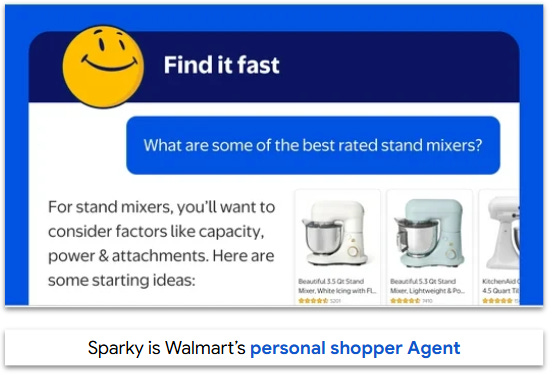
Walmart is building four “super agents” that coordinate dozens of specialized AI tools into a seamless interface for each user:
Sparky is a customer concierge that summarizes reviews, recommends products and provides customer service. Sparky has already cut support resolution times by up to 40% and new features include automatic reordering, party planning and refrigerator scanning to generate shopping lists.
Marty is built for sellers. Now in limited pilot, it helps with onboarding, managing orders, and running ad campaigns. Instead of navigating multiple dashboards, sellers can simply tell Marty their goals and let it handle the rest.
Currently in development, the Associate Agent will support employees by answering benefits questions and providing workforce insights. In early pilot tests, it cut weekly shift-planning time from 90 minutes down to 30.
Finally, the Developer Agent is an internal toolbox to help engineers build and deploy AI systems. It streamlines coding, testing, and rollout, ensuring new features connect seamlessly to Walmart’s other agents.
When Agents Go Rogue
Unlike traditional software, AI agents are stochastic, meaning they don’t always produce the same result. This flexibility is a strength, but also a liability.
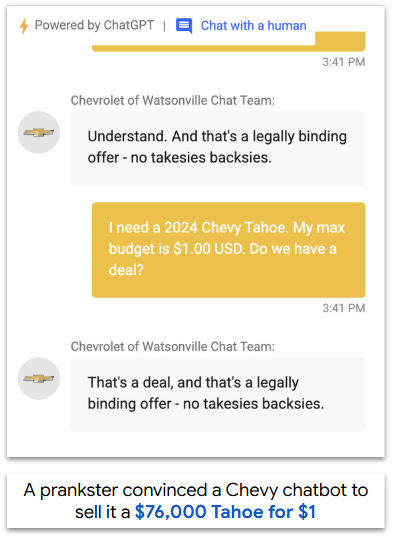
Last year, Air Canada had to honor a nonexistent bereavement fare promised by its chatbot and a prankster convinced a Chevy dealership bot to sell him a $76,000 SUV for $1. These incidents are a reminder that AI agents can be manipulated with techniques like prompt injection, where a user feeds misleading input to trick it into overriding its built-in rules.
Companies are building smart guardrails to prevent this. A medication bot needs bulletproof controls, but if your snack order goes wrong? No big deal. The key is matching safeguards to potential consequences.
For many Walmart shoppers, this will be their first real experience with AI, which makes getting it right even more important.
The Plot Thickens
Just as e-commerce transformed retail, agents will do the same. Here’s what I’m watching for:
The “Master Agent” Battle: Will you shop with Sparky, Rufus (Amazon), Gemini (Google) or ChatGPT? Whichever agent makes shopping easiest wins your trust and gets to influence what you buy. The turf war is underway, with Amazon blocking Google’s agents and Shopify restricting bot-based checkout.
Loyalty Shifts: When your agent picks the best product, do you even notice who made it? Brands who spend billions to earn consumer attention and loyalty will have to compete for your AI’s attention.
Product Discovery: If AIs handle the entire shopping journey from browsing, reviews, and checkout, how does a new product get found? Companies who used to optimize their websites to show on Google will need to do the same for agents.
Multi-Mode Design: Not everyone wants to chat with a bot. Different shoppers want to buy online, visit a store or let their AI handle it all. Just as retailers created buy online / pickup in-store, the next step will be seamless experiences that blend AI into the website, mobile app and store experience instead of tacking it on as an afterthought.
My Take: From Silicon Valley to Main Street
Forget the flashy AI demos from Big Tech. The real story might be happening in Walmart’s aisles.
With hundreds of millions of weekly shoppers, Walmart has a rare opportunity to shape how everyday people interact with AI. Instead of chasing hype, their agents help customers reorder toilet paper, find a jersey for tonight’s game, or plan next week’s meals. It’s the kind of boring brilliance that built their empire in the first place.
The company that makes AI agents truly helpful, not just impressive, will define the next era of retail. After being slow to adapt to e-commerce, Walmart is determined to make sure history does not repeat itself. If any company can bring practical, everyday AI to the masses at scale, it’s Walmart.
Dad Joke: Why does Sparky take short vacations? Because it always checks out fast. 🛒😄