

Trump’s AI Action Plan: Deregulate, Dominate, Deploy
America First

At a Glance: Last week the Trump administration released its AI strategy titled America’s AI Action Plan. The plan aims to win the global AI race by removing regulations, boosting infrastructure and exporting American-made AI. Supporters hailed its pro-innovation strategy while critics called it a giveaway to big tech that ignores key risks. Either way it’s a sharp pivot for the government’s plans for the future of AI.
A Rough Year
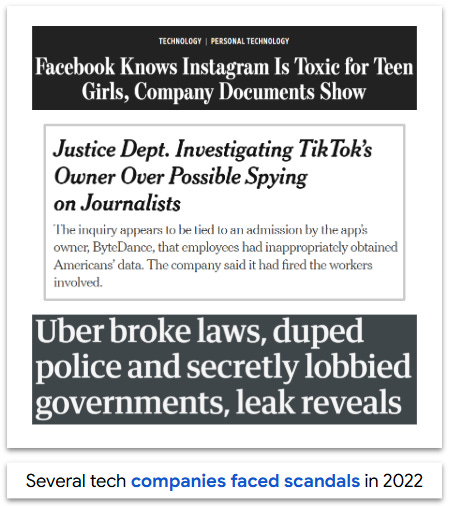
2022 was a bumpy year for technology firms. Leaks revealed that Instagram pushed harmful content to teen girls, TikTok spied on journalists, and Uber deceived law enforcement. In November, the Crypto exchange FTX collapsed, wiping out $8 billion in customer assets through illegal trading.
Later that November, OpenAI launched ChatGPT. User response was staggering: 100 million people signed up in just two months, making it the fastest growing product in history. But even as people were captivated by its human-like answers, they also began to worry about its impact on society.
A Tech-Wary White House
Joe Biden was skeptical of technology firms, calling them a “tech-industrial complex” and a threat to American democracy. His administration took a conservative approach towards AI, releasing an AI Bill of Rights focused on bias, misinformation and responsible use in October 2022, just before ChatGPT’s launch.
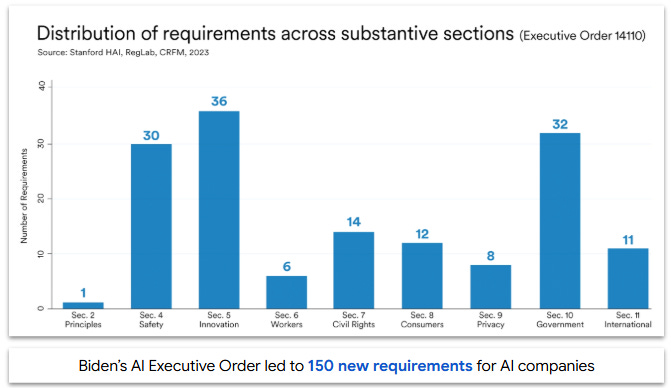
As AI capabilities surged in 2023 the White House pushed leading companies for commitments to address misinformation, bias and security. That October, Biden issued an Executive Order that mandated safety testing and directed agencies to regulate AI, resulting in 150 new requirements companies had to follow.
Ironically, these new regulations actually increased large companies’ power because many smaller firms didn’t have the resources required to comply.
The Race is On
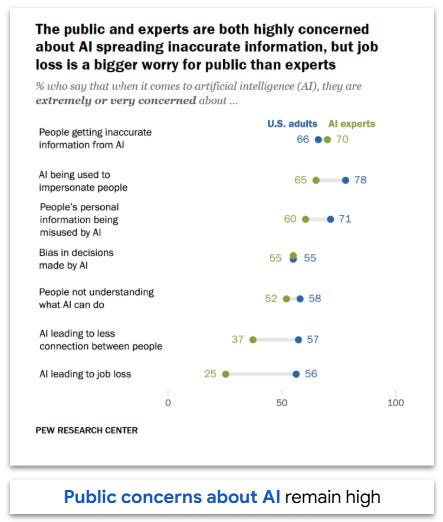
The landscape today looks very different from 2023. AI adoption is booming: ChatGPT has passed 500 million users and forecasters predict an economic boom as companies rush to implement AI in operations. While more Americans are using AI, anxiety remains high with concerns about impersonation, information misuse and lost human connection leading the way.
Politicians and technology leaders are especially concerned about China’s AI capability. Experts believe AI will provide a decisive economic and military advantage, and want the U.S. to own this edge. This competition against China has unified many different interests in a race to be the global leader in AI.
Donald Trump repealed Biden’s executive order on his first day in office, and has replaced it with a policy roadmap titled America’s AI Action Plan.
Here’s the Plan, Man
The plan has three pillars:
Pillar 1: Accelerate AI innovation seeks to reduce regulations and promote AI adoption. It tasks agencies with repealing rules that hinder AI development and discourages states from enacting local regulations.
Pillar 2: Build American AI Infrastructure focuses on building data centers, electrical capacity, chip manufacturing, power grid upgrades and cybersecurity. It aims to expedite building with faster permitting and exclusions from environmental provisions like the clean air and water act.
Pillar 3: Lead in International AI Diplomacy and Security positions U.S. technology as the global standard by exporting it to allies and coordinating restrictions on China. It also tasks the U.S. with leading the globe in evaluating national security and biosafety risks from AI systems.
Buy American
A top priority for the plan is exporting the American AI tech stack worldwide, boosting US industry by encouraging allies to adopt American-made hardware, software and standards. It’s also a form of soft power: as AI systems built on Western norms spread, so does American cultural and ideological influence.
The plan also attempts to limit China’s AI ability by denying it access to the most advanced chips. This requires coordinating with allies and developing new monitoring technology to ensure China doesn’t obtain chips through black market channels.
Over Here, I’m Open!
One of the plan’s top priorities is to advance open-source models. Unlike closed models, open models allow developers to access a model’s weights (the numbers that make up its “brain”) and programming logic.
Open models are especially useful for startups who want to avoid depending on a single provider, companies that need to protect sensitive data, and researchers who want to test new ideas.
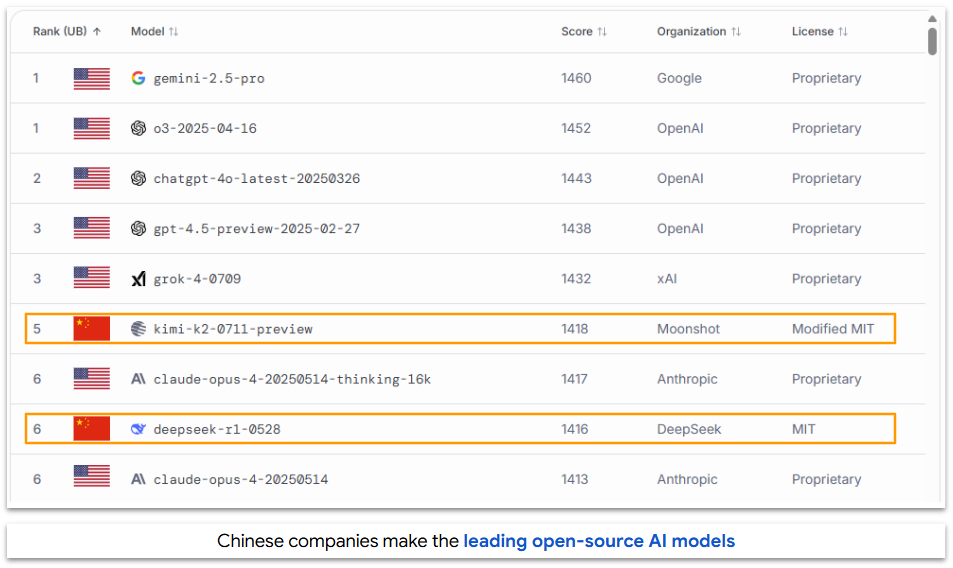
While OpenAI and Google have the best closed models, the top open models are made by Chinese firms DeepSeek and Moonshot. The plan focuses on establishing the US as the global leader through access to computing power, research and customers.
Fresh or Rotten?
On balance, feedback on the plan was positive, with the Washington Post’s editorial board saying “Trump is off to a good start” and calling it a “promising blueprint”. Several criticisms landed, however. Public watchdogs called it a “gift to big tech” that removed consumer environmental and protections to benefit companies. Authors and artists were outraged by the omission of copyright protections and Trump’s dismissal of their concerns. Energy experts criticised the push for building energy capacity while blocking low-cost solar and wind buildouts.
What I’m Watching For
Mike Tyson said, “Everybody has a plan until they get punched in the face”, and this plan will be tested by real-world realities. Here are dynamics to watch:
Government Funding: The plan’s ambitious goals will require new spending on research, workforce training and oversight agencies. Will congress fund these priorities given its recent cost-cutting?
Workforce needs: Analysts estimate as many as 500,000 new skilled workers will be needed to support data center buildouts. Will we be able to meet this demand without immigration?
AI-Driven Crisis: How will the government’s hands-off approach to regulation hold up if an AI model does something illegal or harmful?
Allied Response: Will other countries, especially in the EU welcome the U.S. “full stack”, or push for their own systems or regulations?
This plan marks a sharp turn in U.S. AI policy: more hands-off, more global and a lot more ambitious. But success won’t come down to vision alone, it’ll require funding, talent, and buy in from allies. It’s strong on paper, now we’ll see how it holds up in the ring.
Dad Joke: Why does the White House want to adopt AI? Because its ActIon Plan won’t see a ton of use if you take AI out of it! 🤔😆