

OpenAI's Sora 2: Delightful Party Trick Today, Threat Tomorrow
What comes after the magic?

At a Glance: Last Thursday OpenAI released the latest version of its video model named Sora, which was a major upgrade that included built-in audio. But the bigger splash was their new iPhone app that allows users to generate videos and share with friends. And boy is it fun! Videos of SpongeBob being arrested, Bob Ross painting King Kong and Sam Altman stealing GPUs went viral and the app surged to #1 on the iPhone app store despite being invite-only. Analysts called it “magical” and users flooded internet forums begging for invites.



OpenAI goes Social
Remember when analysts said ChatGPT would lead to the downfall of Google search? Don’t look now, but all of the sudden it’s threatening social apps like TikTok, Instagram and YouTube. Its Cameos feature lets users star in their own videos and invite others to do the same, turning “watch my video” into “Look at you and I on Mars!”
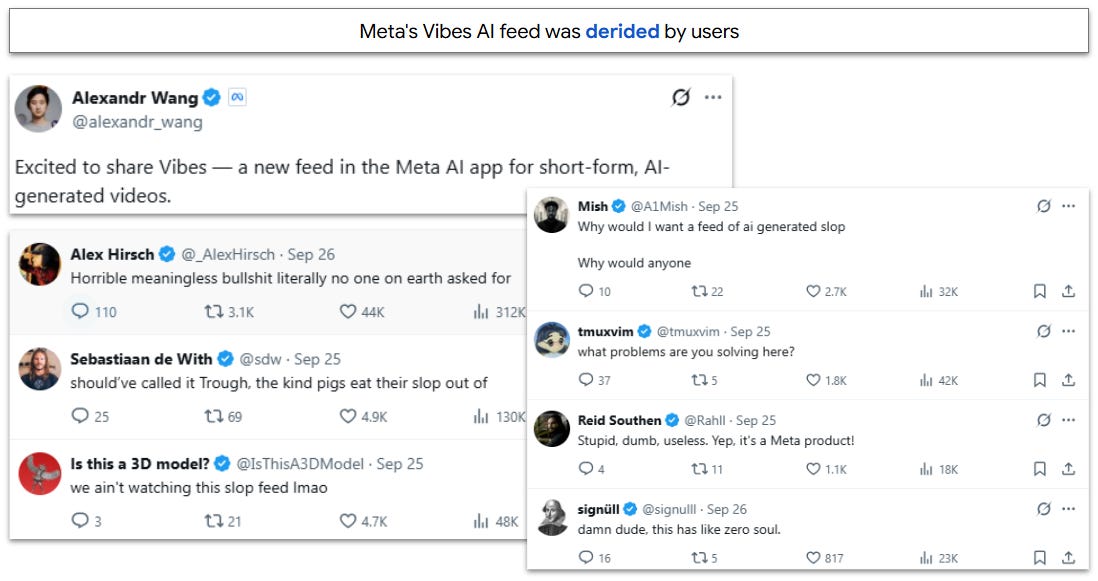
Sora’s success was especially painful for Meta, whose AI feed called Vibes flopped just a week earlier. Users rejected it as pure “AI Slop”, a backlash driven as much by Meta’s privacy scandals as the product itself.
Cameos are cool, but OpenAI faces stiff competition. TikTok has a billion users, Instagram and YouTube each have 3 billion, and all of them are integrating AI into their feeds. Few users are going to abandon those apps, so Sora needs to fit as a new option into their digital diet. OpenAI’s invite-only strategy buys them time, while they try to make Sora more than just a viral fad.



The Four Horsemen of the AI Slopalypse
Sora surfaces challenges that have the same underlying dynamic: OpenAI is trying to launch responsibly despite market dynamics that push it to do the opposite. Let’s step through them:
A Bait and Switch
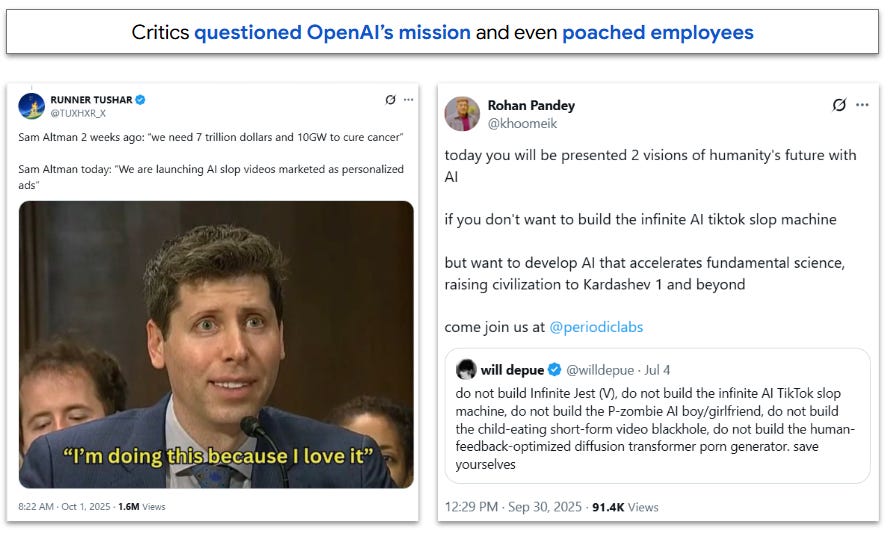
Do you know how tech leaders tell us AI is going to cure cancer, solve climate change and eliminate world hunger? A lot of critics sure do, and they questioned how dancing SpongeBob videos advance humanity.
This hits especially close to home for OpenAI, which was founded with a mission to ensure that artificial intelligence benefits everyone. But they also face a business reality: competing with Google and Meta requires hundreds of billions of dollars for datacenters to power the latest AI models. Breaking into the $164 Billion digital video advertising market will help them fund their lofty ambitions.
Dopamine Zombies
Social media is an addiction machine: you TikTok to kill 5 minutes and two hours later your wife tells you it’s bedtime. (I have first hand experience with this 😬)
Sora’s infinite scroll and personalization algorithm evoke those same fears, and users called it “nearly impossible to put down”. To their credit, OpenAI says they are optimizing for long-term satisfaction and built in periodic check-ins to ask users how they’re feeling. But studies show these nudges to have limited impact without real teeth like active choices or forced pauses. OpenAI means well, but those good intentions will compete with optimization engines that maximize engagement.
Copyright Chaos
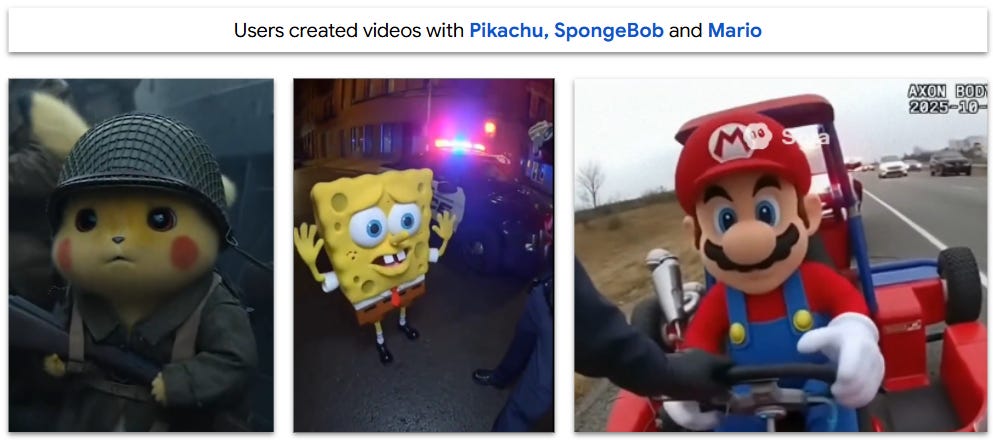
Within hours of launch, Sora’s feed was flooded with copyrighted characters like Pikachu, SpongeBob and South Park. OpenAI’s opt-out model (users can generate anything unless owners object) drew immediate criticism, forcing a reversal to opt-in only.
Now OpenAI faces a different challenge: convincing Disney, Nickelodeon and others that Sora content is “interactive fan fiction” that provides free exposure instead of diluting their brands. Revenue sharing will help, but they will also need robust systems to track usage, make payments and process handle requests across billions of videos.
Misinformation Mudslide
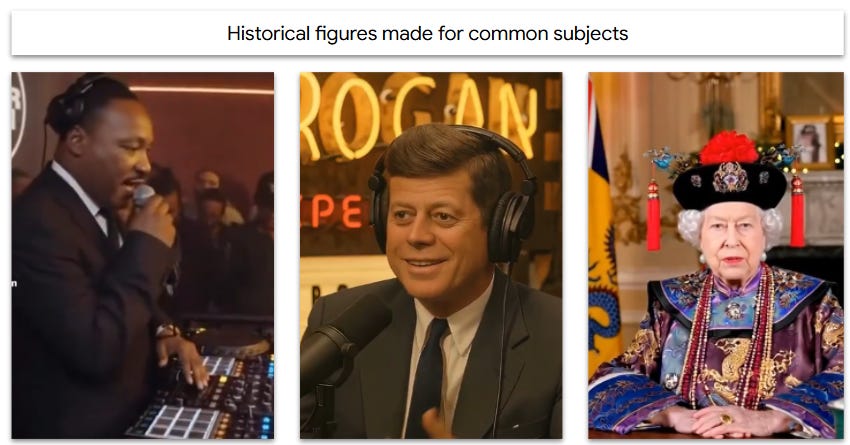
AI makes it shockingly easy to create videos that pass as real. Trending posts included fake police bodycam footage, fabricated news reports, and public figures like JFK, Martin Luther King and Queen Elizabeth in scenes that never happened.
South Korea faced an especially dark example last year when technology fueled a surge in deepfake porn targeting students and K-pop celebrities. Public outrage forced the government to step in, making arrests and passing laws to make it a crime to possess or even watch deepfake porn.
Sora vs. “Spicy Mode”
OpenAI launched Sora 2 with strict guardrails and protections. In my testing I was blocked from creating a zombie battle (too violent), singing a duet with Taylor Swift (protected likeness) and uploading a photo of my wife. (you need explicit authorization). Generated videos also include watermarks and metadata that identify them as AI generated.
Here’s the problem: OpenAI has 700 million users and a brand reputation to protect. While they are being responsible, others may not. Elon Musk’s Grok AI already has a “spicy mode” that allows sexualized deepfakes of celebrities. You can count on the fact that other companies with less to lose will take shortcuts in the race for users and profits.
Let’s Pause and Enjoy This
Is Sora a fun new video tool or a vehicle to drive addiction, violate copyright and spread misinformation? The answer is yes to both! Sora is both delightful and a reminder of AI’s serious pitfalls.
Today, Sora’s videos are more of a party trick than a game changer. They’re obviously AI generated, riddled with errors and limited to 10 seconds. But this is temporary, and when AI videos become longer, more realistic and error-free, we’ll feel the full impact of the Four Horsemen.
When that happens, we’ll need real solutions for misinformation, copyright and content moderation that don’t exist today.
But that day isn’t here yet. Right now, Sora is new and fun, so enjoy it! So go ahead, make a video of yourself riding a T-Rex with Elvis, winning an F1 race or hanging out with Zombies. Just remember these won’t be a party trick forever.



Dad Joke: “Why did Sora 2 go viral? Because it caught everyone’s A-eye” 👁️