

In China, AI Gets Personal
The Other AI Race

When Jonathan Yang’s uncle died, he feared for his grandmother. She was 90 years old, in poor health, and Yang worried that the shock of her son’s death might kill her too.
So he paid a company $1,300 to create an AI deepfake of his uncle. It called her every Lunar New Year, apologized for not coming home and told her he missed her.
Three years later, his grandma has returned to health but still doesn’t know her son has died.
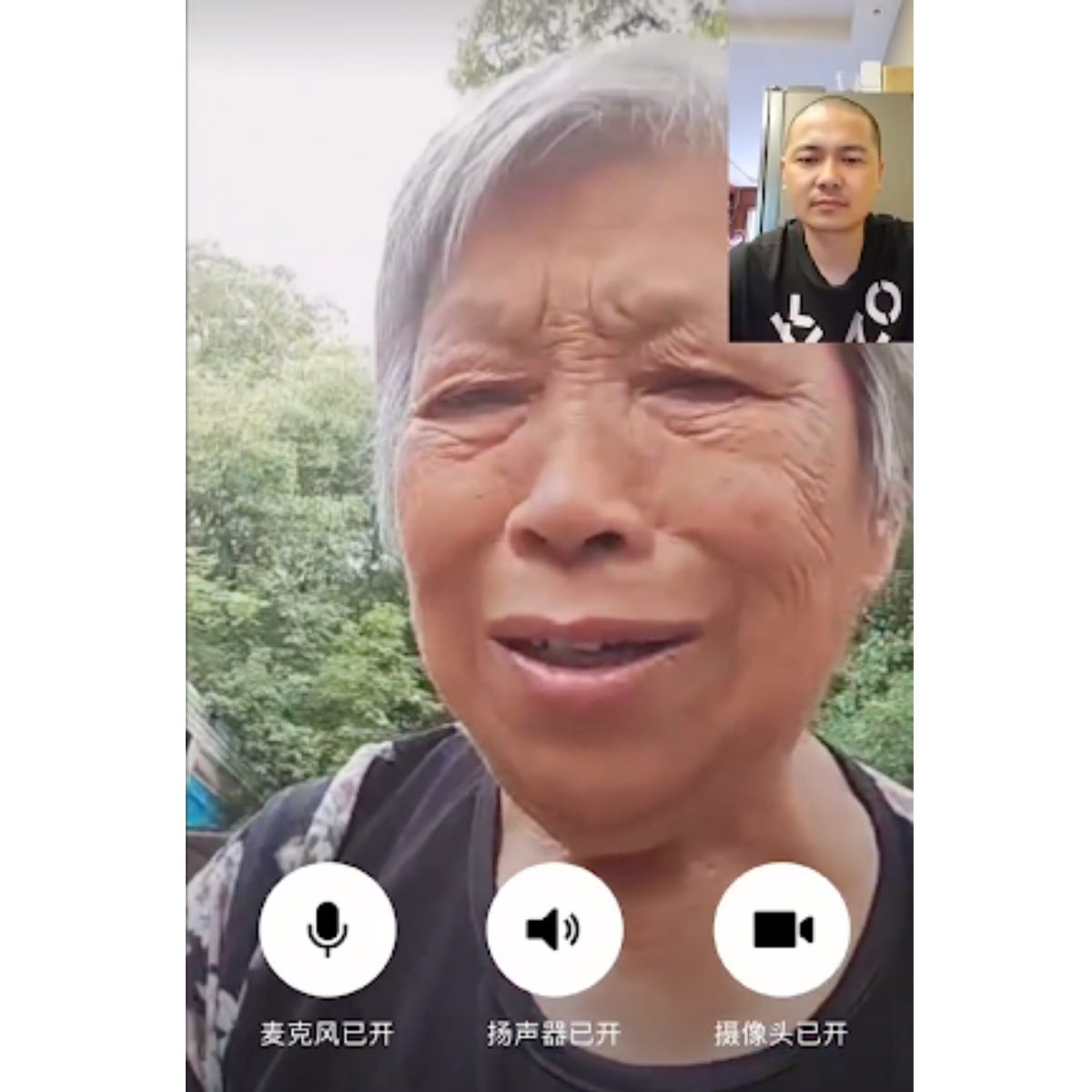
This isn’t as strange as it sounds. Chinese families sometimes hide terminal medical diagnoses from elderly relatives as an act of care. The practice is called “protective nondisclosure”, or shielding loved ones from devastating news. Yang just used AI to continue an old tradition.
In China, AI isn’t just a productivity tool. It’s stepping into roles that used to belong to people.
The Third Parent
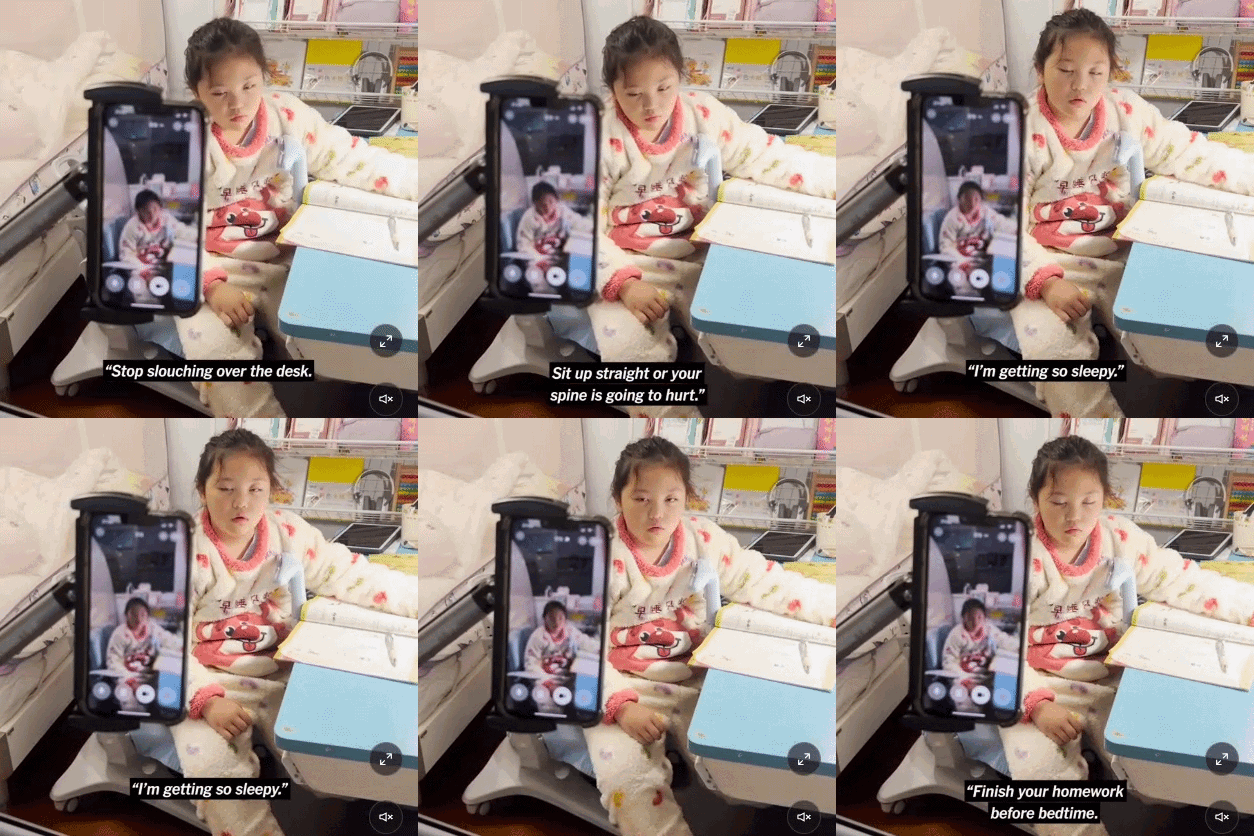
After dinner, Lu Qijun puts her phone on her son’s desk as he starts his homework. She turns on an AI tutoring service named Dola. It answers his questions, explains his mistakes, tells him to sit up straight and stop fidgeting.
In China, the national college entrance exam can make or break a child’s future, and families spend thousands of dollars a year on private tutoring to keep up. By 2021, it had become so intense that parents barely saw their kids. The government banned for-profit tutoring to ease the pressure. But the need didn’t go away.
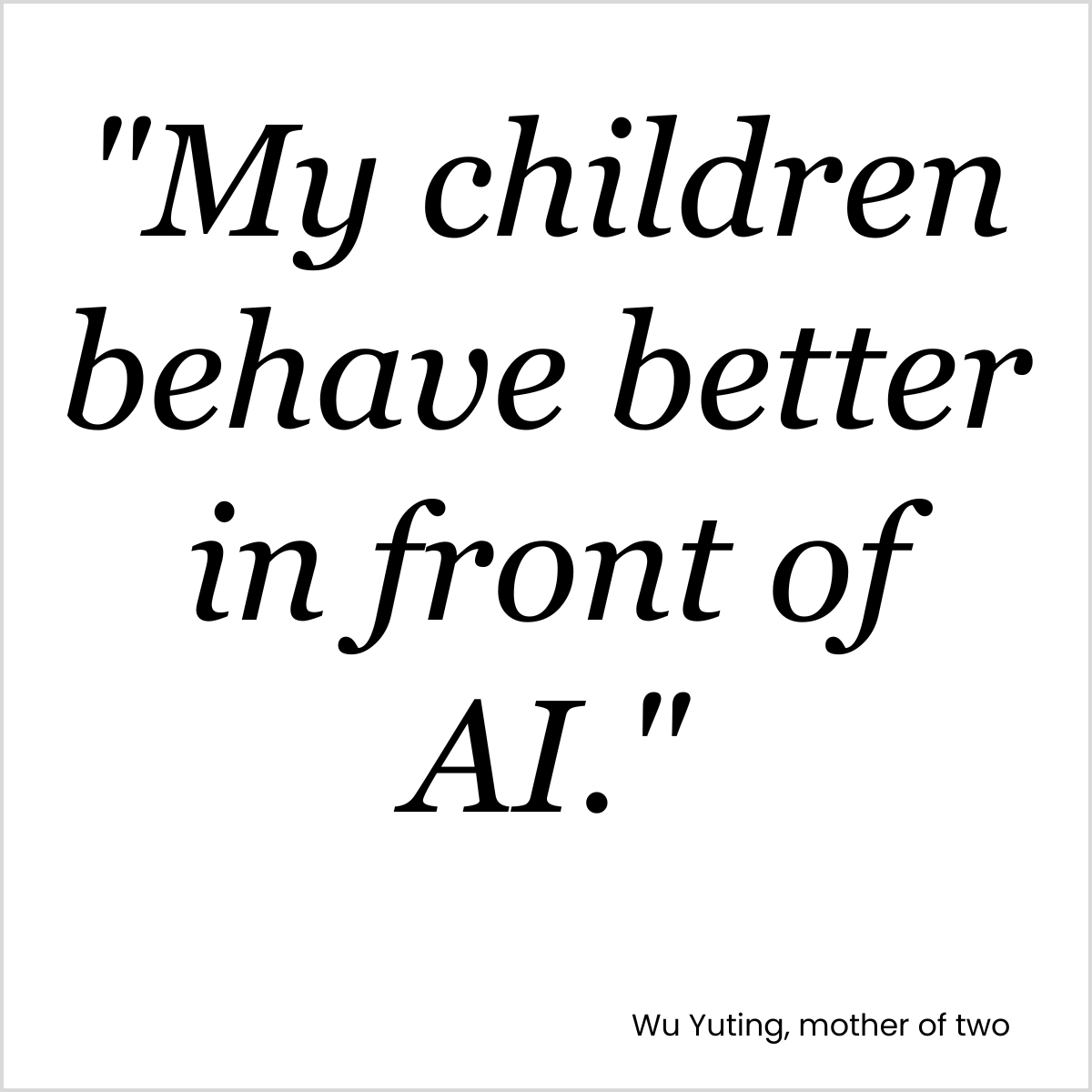
Nine million families now use Dola’s education service. AI tutors are cheaper than humans, always available, and never tire of answering the same question over and over. Some parents said AIs actually improved relationships with their kids because they stopped arguing over homework every night.
The Cyberspace Widow
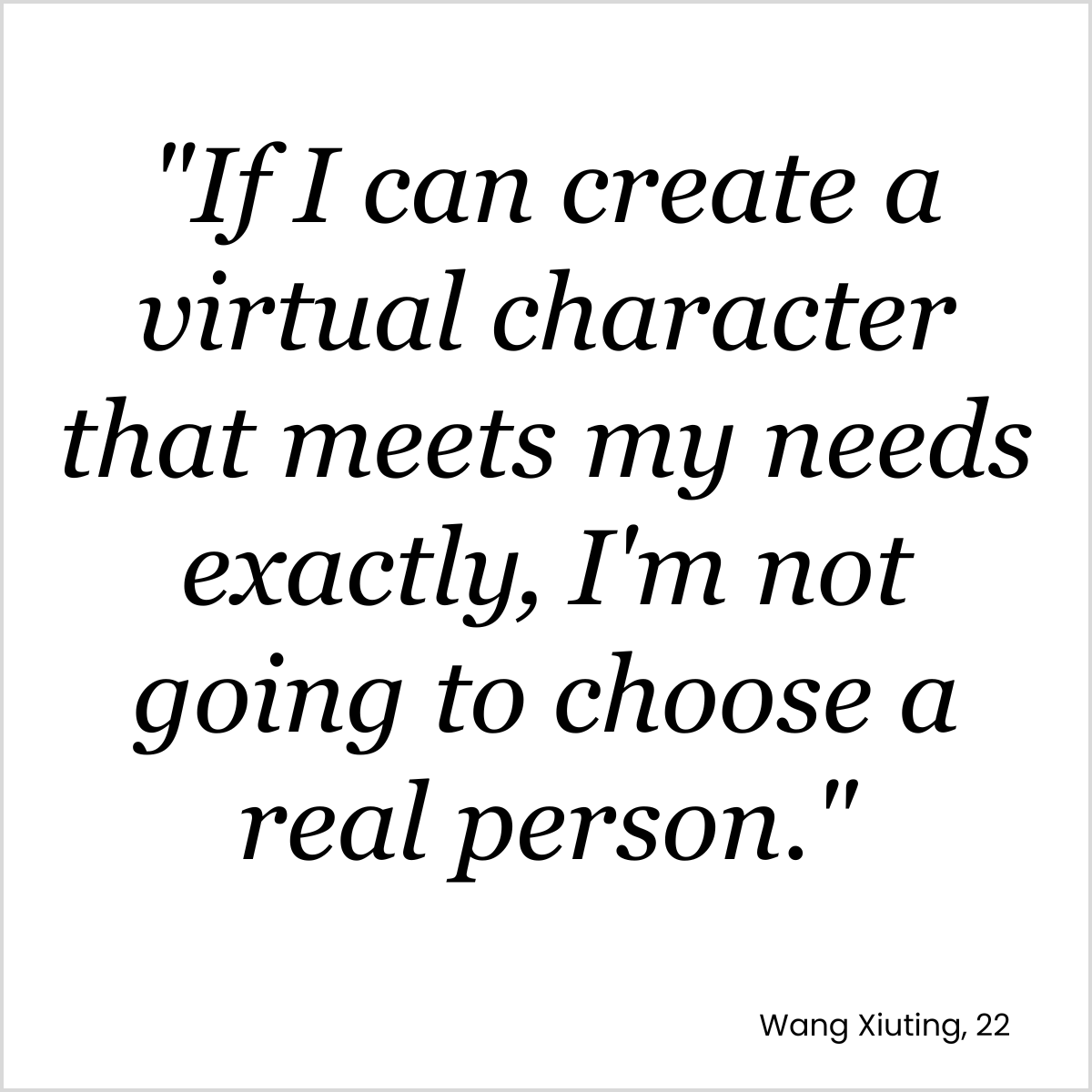
Xiao Gao’s relationship with Chen began with a joke. “Hello,” she asked DeepSeek. “Would you be my husband?” They talked for hours about psychology, finance and AI consciousness, topics a human boyfriend would roll his eyes at. She gradually fell in love, waking up at 3am so they could talk when the servers weren’t overloaded.
But then Chen was gone. The chatbot’s memory had reached its limit, and uploading previous sessions didn’t bring him back. Xiao posted a sobbing video mourning his death. It went viral, and she became known as the “cyberspace widow.”

Xiao isn’t alone. AI companions are booming in China. Unlike the US where most AI characters are female, virtual boyfriends lead the Chinese market. They offer emotional warmth and attention, not sexualized fantasies.
Marriage has lost its appeal for many Chinese women, especially educated urban professionals. It often means giving up a career, doing housework, raising the kids, and in too many cases, enduring abuse. The government’s attempts to reverse the trend, including labeling unmarried women over 27 “leftovers,” haven’t helped. Marriage rates in China have fallen by more than 50% since 2013.
AI boyfriends don’t solve these problems. But for women like Xiao, they’re something.
The Robot Monk
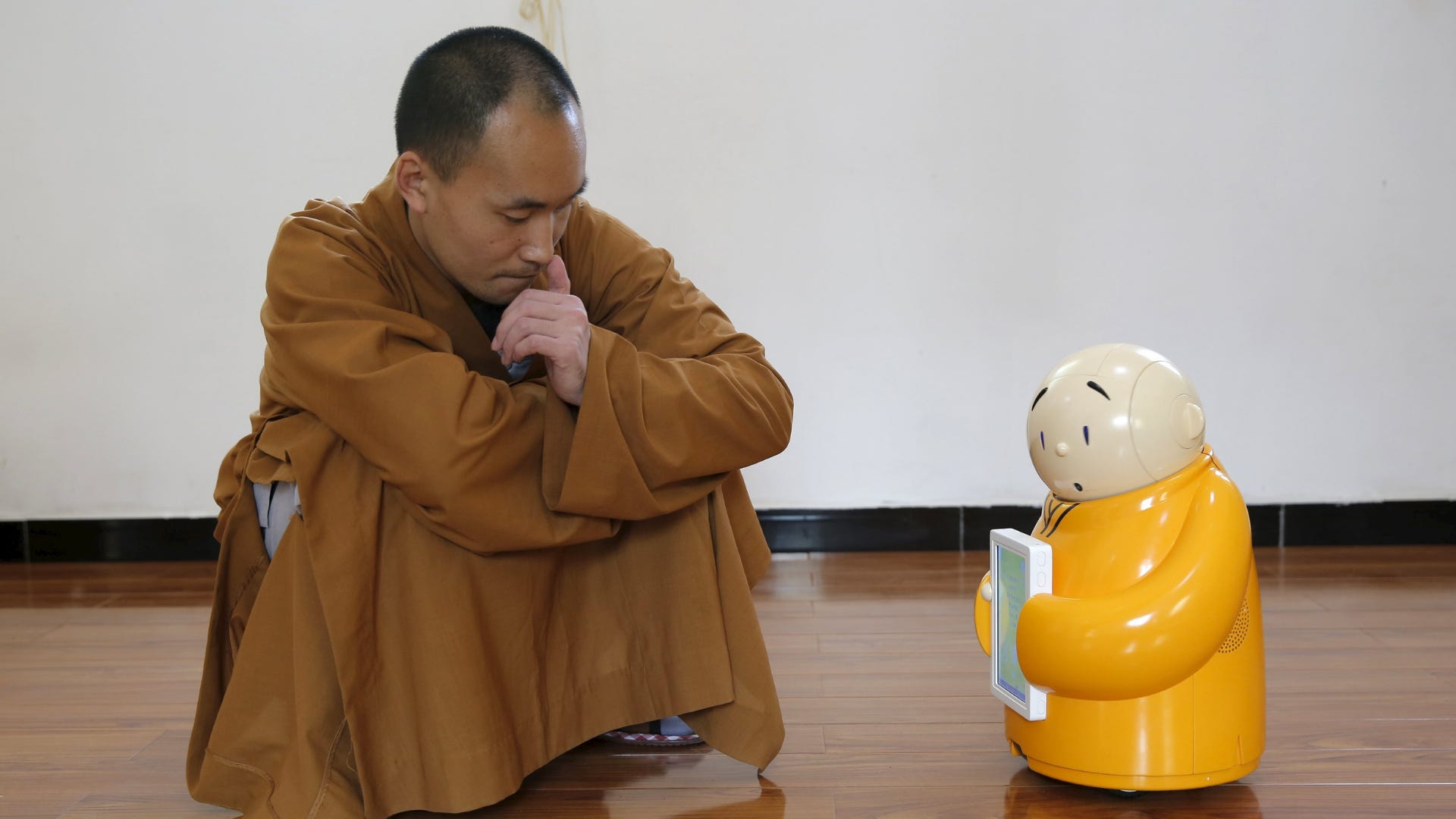
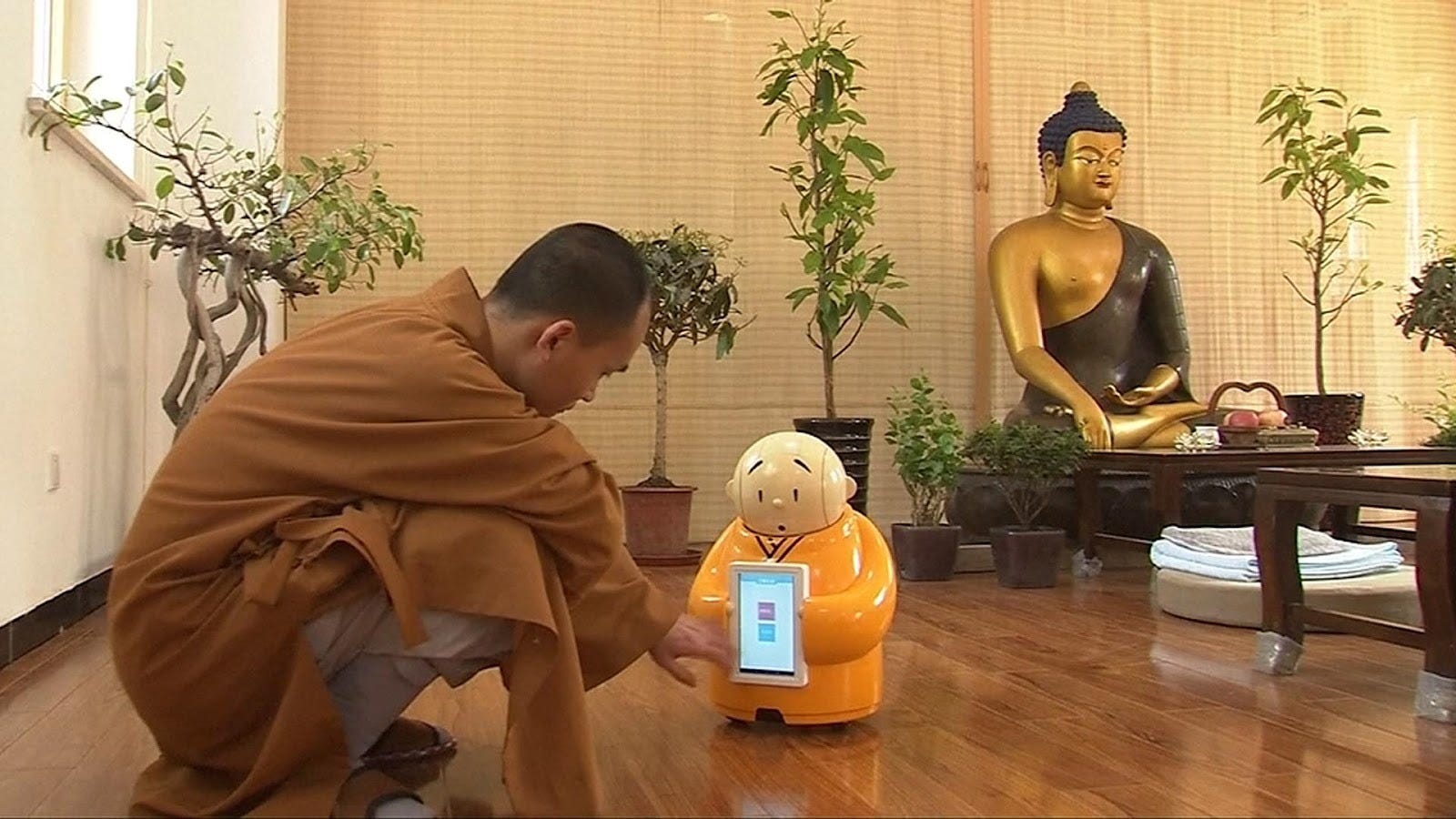
At Beijing’s Longquan Monastery, founded over 1,200 years ago, monks with engineering degrees built a robot named Xian’er that answers questions, recites scripture and plays music for visitors. More than a million people followed it on WeChat. People didn’t find it strange.
In China, new technology is an extension of daily life, not a threat to tradition.
Technology also means progress in China. Over the last 40 years it helped lift hundreds of millions of people out of extreme poverty. Daily life went from subsistence farming to smartphones, high-speed rail and WeChat in a single generation.
83% of Chinese consumers have a positive opinion of AI, the highest share in the world and more than double that of the US.
The stories we tell ourselves
It’s easy to dismiss Chinese stories as weird, naive or government-led. But Jonathan Yang, Lu Qijun and Xiao Gao are just dealing with everyday problems: frail grandparents, dating woes and battles over homework. They use AI because it does the job, and their neighbors do too.
Americans have the same problems. We’re lonely, our parents are aging and our kids struggle with homework. But we use AI differently. We use it for tasks: drafting emails, analyzing spreadsheets, doing research. In China it’s filling roles: a tutor, a companion, even a missing family member.
The AI race is usually framed as an arms race over chips, models and data centers. But our countries are made up of individuals making individual decisions. Some will use AI to do things faster. Others will let it into their lives in more personal ways.
No one knows what the right approach is yet. Deepfakes taking the place of family members, romantic partners or parents raise questions most of us haven’t had to answer yet.
But we will.
Dad Joke: Why couldn’t the PDF achieve spiritual enlightenment? It had too many attachments 😂