

AI Advertising Is Missing the Point
Mr. Fuzzy shows the way

I spent much of this holiday break on the couch recovering from a nasty bout of influenza. As I watched Pete Davidson banter with Alexa for the umpteenth time, I reflected on the state of AI advertising.
It’s not great.
As I wrote in December, Americans have the lowest perceptions of AI globally. We harbor memories of past tech scandals, fears of job loss, and AI robbing humans of creativity. Despite this, many AI companies position AI as a substitute for humans instead of something that makes us more capable.
Some of the latest AI ads get this right, but many don’t. Let’s take a look.
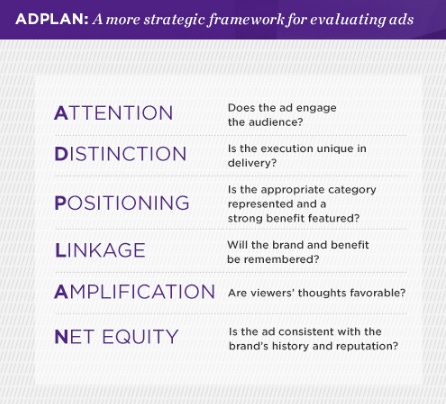
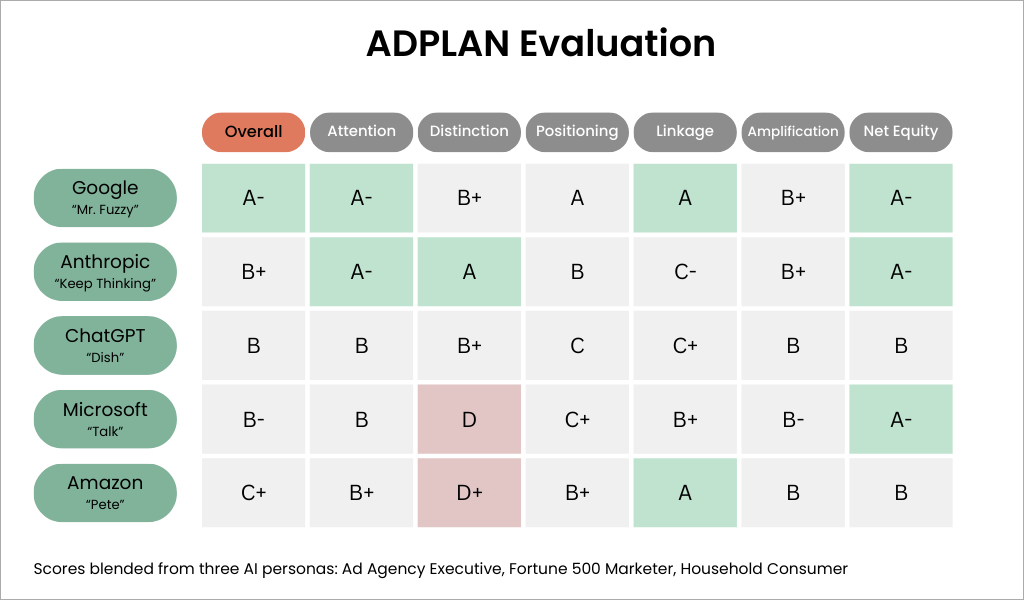
Author’s note: I majored in marketing at Kellogg, where we learned the ADPLAN framework for evaluating ads. It goes beyond armchair quarterbacking to focus on an ad’s impact, not just whether it was funny or had a celebrity. I’ve included an ADPLAN evaluation in the appendix, scored by a panel of AI personas. (The rest of the article is my own, for better or worse.)
OpenAI: Is that it?
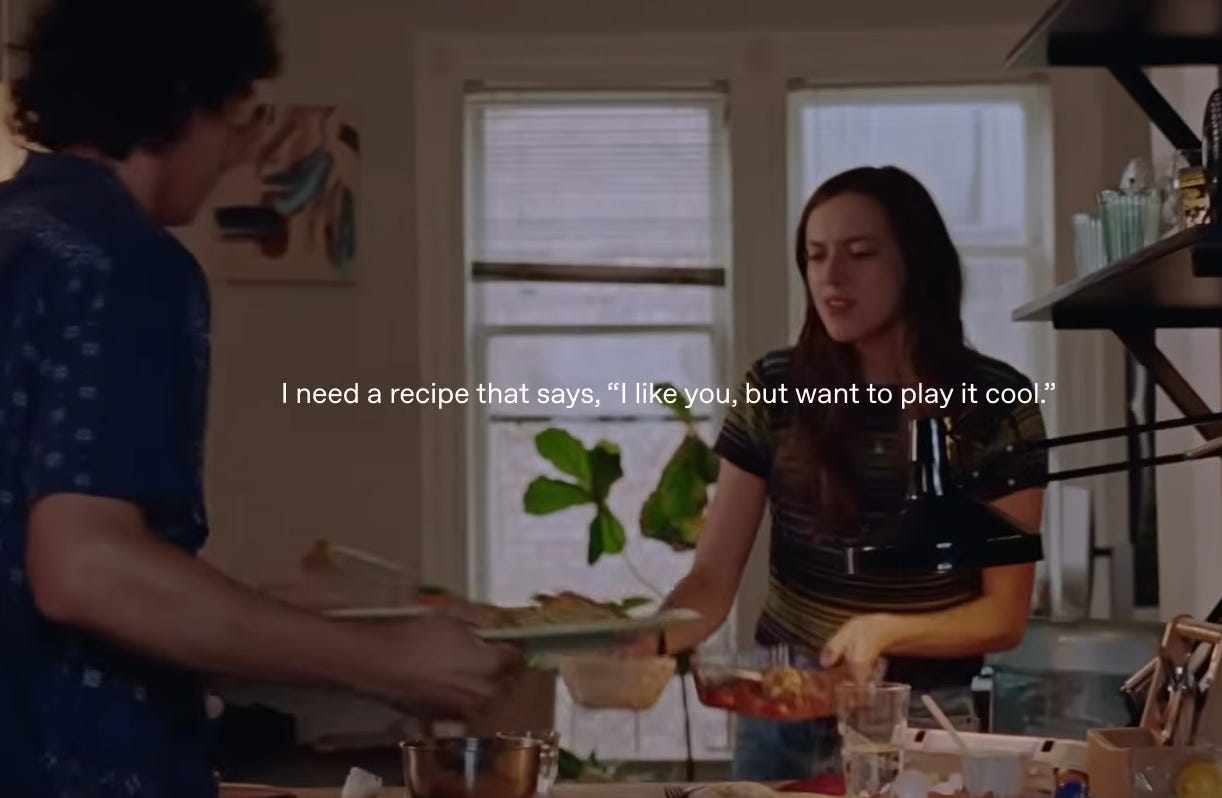
In OpenAI’s latest campaign, a guy cooks a ChatGPT recipe for his date. She loves it!
But the ad left me with questions: What if there’s a wrong ingredient or it doesn’t taste good? If his girlfriend loves it, will he tell her he got it from a chatbot?
It also made me a little sad. Instead of calling his mom or buddy who’s a chef, he asked a chatbot. I wondered what he missed by not picking up the phone.
The other ads in the campaign feature similar tasks: a workout guide, a trip plan, a study routine. But the answers are boilerplate and I’m left wondering “what’s the point”? If AI is the greatest technology since electricity, these ads aren’t showing it.
Anthropic: Keep Trying
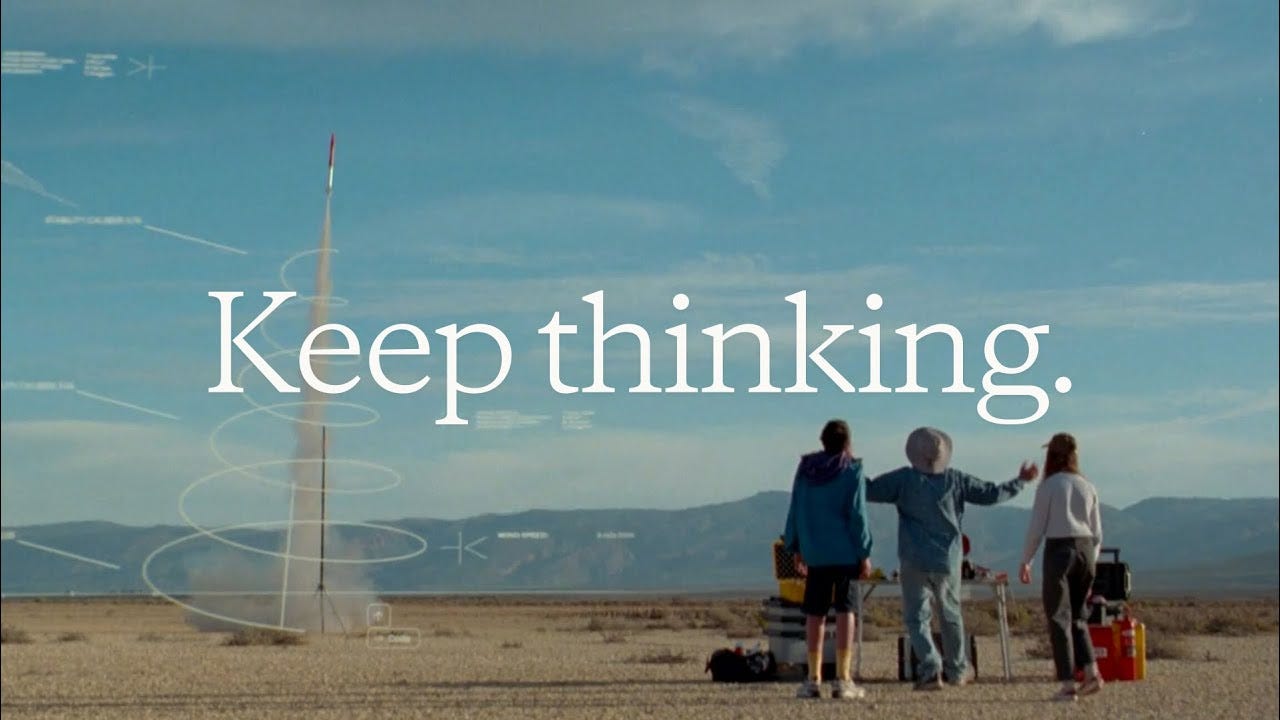
Anthropic’s “Keep Thinking” features striking visuals (a falling piano! rockets in flight!) set to a track from rapper MF Doom. The tagline claims “There’s never been a worse time to be a problem”, and encourages the viewer to keep thinking. The ad is distinctive, but the benefit isn’t clear. If I wasn’t a Claude user I’d have no idea what it does.
Everyone has problems. How does Claude help solve them? Anthropic’s primary target is business customers. It’s hard to see how this spot will make them want to buy Claude licenses.
Amazon: Who’s Pete Talking To?
Amazon’s Alexa campaign stars Pete Davidson bantering with Alexa in his kitchen. He jokes about nicknames and asks for help fixing his sink. Pete is genuine and funny.
But the ads struggle to communicate a real benefit. When Pete asks for help with his sink, Alexa offers a tutorial and then suggests he hire a plumber. That’s the pitch?
The banter made me uneasy. Doesn’t Pete have actual friends to joke around with? It feels more like a statement on male isolation than an ad for technology.

Microsoft: Gets the Job Done
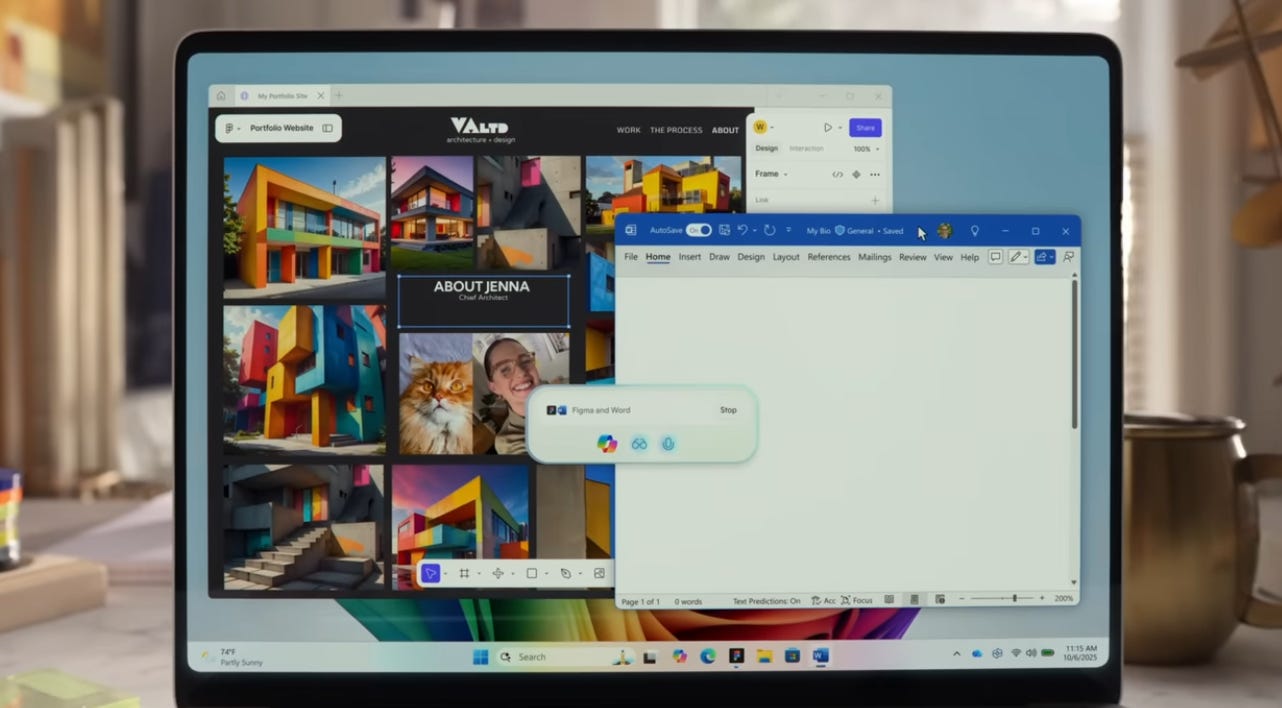
Microsoft’s latest “talk to my PC” ads show people asking Copilot for help with everyday tasks: shopping, analyzing a budget, checking a homeowners guide, building a portfolio website.
It’s straightforward, and it does the job. The tasks are relatable and things we either couldn’t do easily or wouldn’t want to do ourselves. Copilot isn’t replacing humans, it’s making us better and handling stuff we’d rather not do.
Thank Goodness for Google
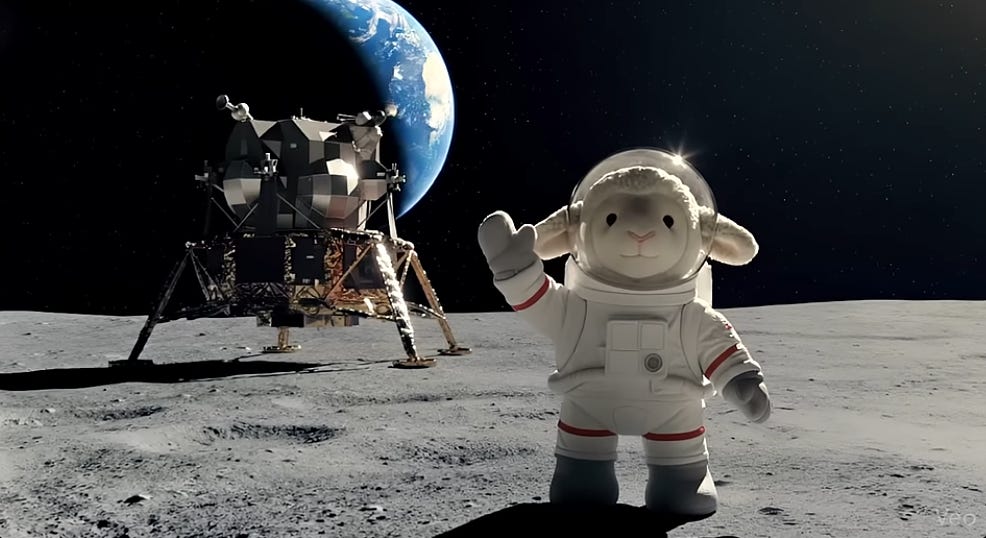
Google’s latest ad “Mr. Fuzzy’s Big Adventure” nails it. A girl leaves her favorite stuffed animal on a plane. Faced with a crisis that makes every parent shudder, Mom and Dad use Gemini to send Mr. Fuzzy on a trip around the world.
He visits the Grand Canyon, the Pyramids, goes skydiving and has R&R time in a spa. He even records a message from the Moon! “See you in um, 7 to 10 business days.”
Beyond the fun, the ad communicates the benefits of AI perfectly. Instead of replacing humans, Gemini helps you do something you simply couldn’t before. And the example is genuinely magical.
This isn’t a one-off. Google’s other ads like a turkey’s Thanksgiving getaway and Santa planning his big night out are delightful and show what AI makes possible.
AI’s Branding Challenge
Advertising for a new category is hard, especially one as anxiety-provoking as AI. Microsoft and Google have years of experience and strong brand equity, and it shows. OpenAI and Anthropic face a tougher challenge: build new brands from scratch that stand out in a landscape of dominant incumbents.
But the biggest test for these companies is telling the story of a human-AI future we actually want. That’s one where AI makes us more capable, not more replaceable.
Google’s leading the way and I hope the rest follow.
Search on, Mr. Fuzzy.
Dad Joke: Why did the mathematician make commercials? Because he loved working with adds!
Thanks for reading!
If you enjoyed this edition, share it with someone with as many friends as Pete Davidson.