

7,000 Times Busier: Leading AI from the Corner Office
No map, no finish line


I’d prepared fifteen slides, a dozen questions, and an excerpt from my AI strategy class. After three questions we’d blown through an hour.
Boy, did they want to talk.
It was the second meeting of our AI Hub advisory board, with the same executives I’d hosted six months earlier.
In November one executive described the mood as “optimistically scared S**less.” Six months later, another said “I’m not any less busy. I’m seven thousand times more busy, and more stressed, and more annoyed.”
Our last meeting was a thoughtful strategy session. This felt like a pit stop for drivers with overclocked engines.
Today’s executives are leading teams through a time of structural change: who does the work, how it’s done, with technology that keeps changing. They’re doing it without a roadmap.
Where the buck stops
Executives have always been accountable for their teams’ work, but now they’re on the hook for AI too.
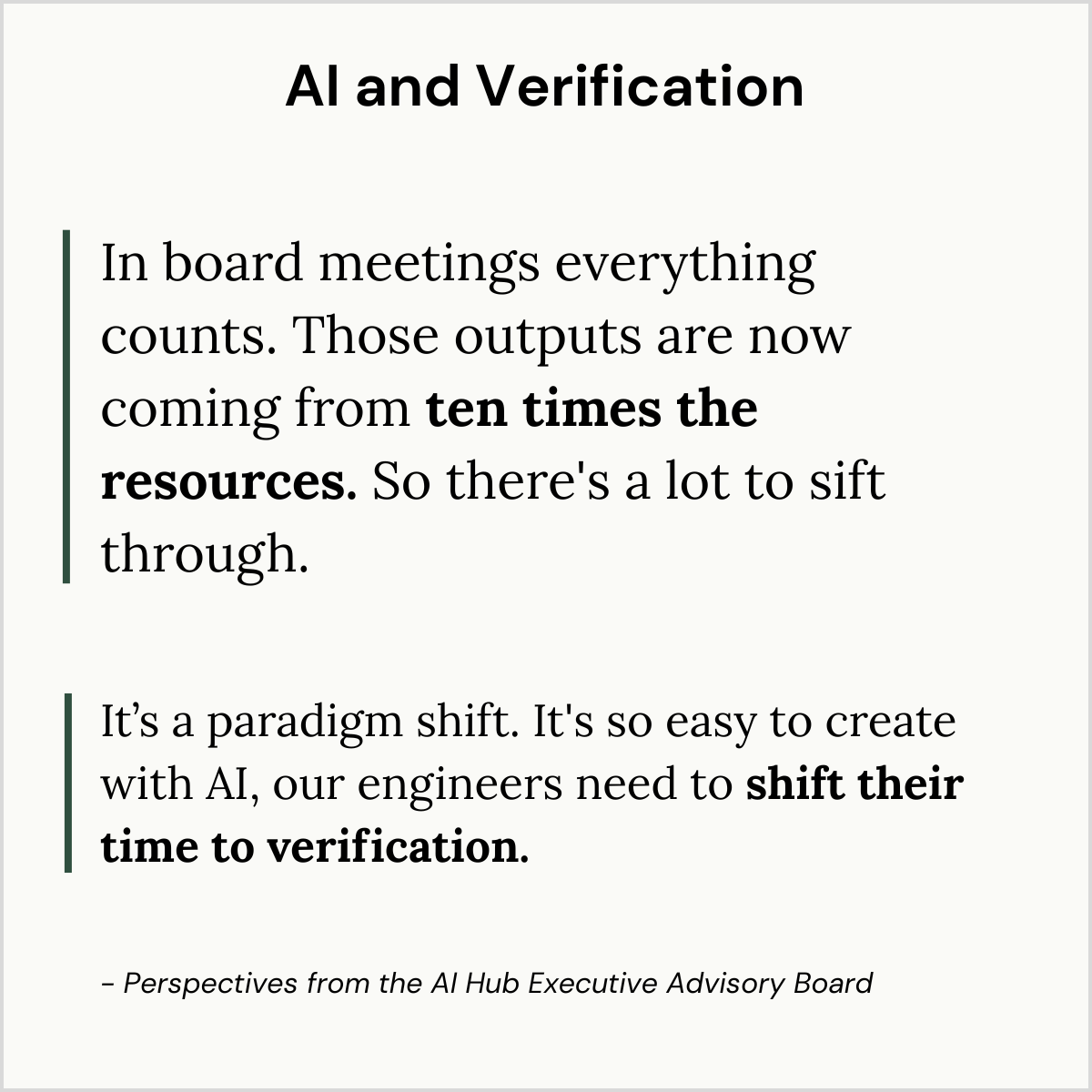
Last year Deloitte had to refund the Australian government after the firm’s report had errors traced to AI-generated content. People laughed, but zoom out and it’s easy to see how they slipped through the cracks. Deloitte has 470,000 employees, and runs hundreds of thousands of engagements each year. Their quality processes were built for human outputs, not AI-generated ones. And the volume of AI work is growing faster than teams can check.
That’s just the humans. AI systems are equally unpredictable. Meeting business requirements isn’t a yes-no question. It’s a matter of how often the AI gets it right, and whether it holds up when a thousand users use it a thousand different ways.
A manager can spot-check individual outputs, but an executive responsible for thousands of AI workflows can’t. More and more companies are turning to AI as the best way to verify growing mountains of AI output.
The buck stops at the executive’s desk. The leaders of the Deloitte engagement have left the company.
The right amount of fear
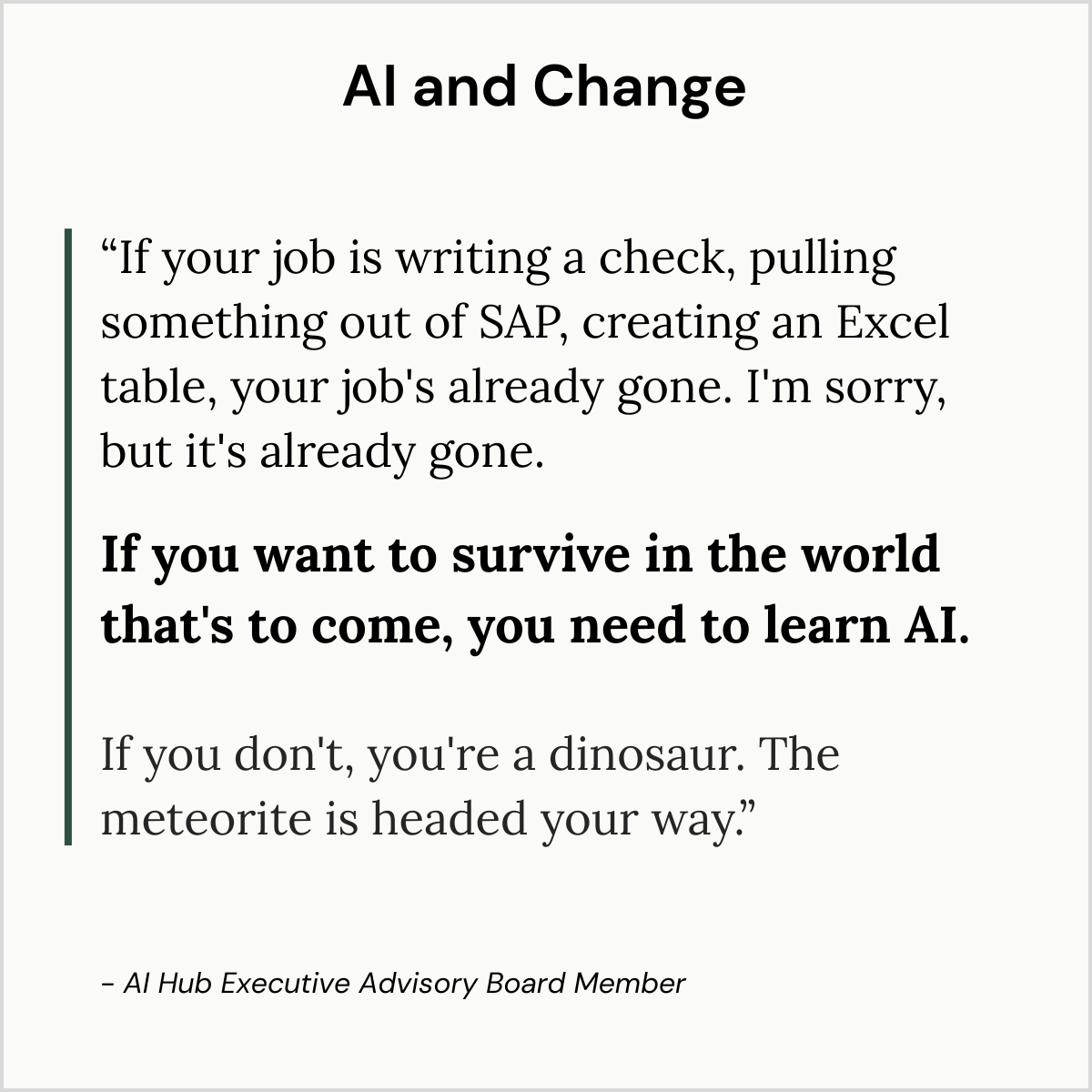
Every company has employees who are excited, fearful, and somewhere in between. That’s one thing in a team; it’s another in an organization of thousands. One leader had to decommission an internal policy chatbot after employees manipulated it into giving incorrect answers. Sabotage or not, employee resistance is a growing trend.
Executives wrestle with how to motivate employees: should they urge, reward, or threaten? Push too little and people coast; too much and they freeze up. The academic term for this sweet spot is productive discomfort. One leader knew he’d found it when employees volunteered to lead their AI role redesign.
Motivation is only half of the challenge. The other half is that every role and team is affected differently by AI. Some are 10% automated, some 50%, and some busier than before. In every case, leaders have to decide whether that warrants minor adjustments or an overhaul.
The unused gym membership
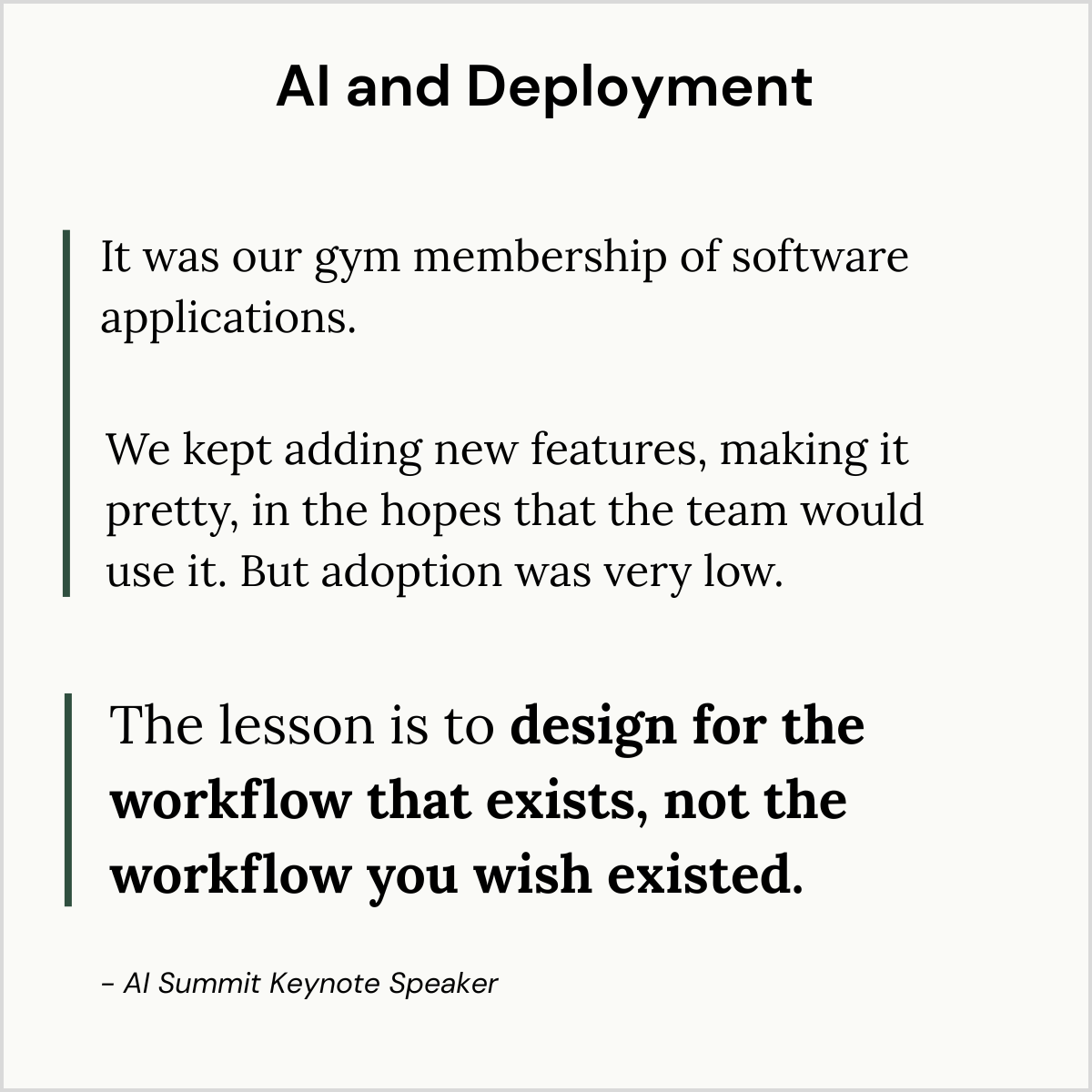
One speaker had built an AI insights tool for sellers. It was powerful, but lived separate from the company’s CRM, where sales reps actually spent their time. So nobody used it.
Other executives had the same story. They deployed a new AI tool, only to see adoption stall because it didn’t fit the existing process. That’s reasonable. An improvement that doesn’t fit a process refined over years can slow things down.
The best deployments answer two questions. First: where does AI fit our existing workflows? Second: what work does AI replace? Skip the first and you build something nobody uses. Skip the second and you make more work instead of improving it.
The second question is the new one. Previous software helped humans do their work. AI raises a different question: what work still needs a human? Executives are making these calls at scale.
The toughest discipline is knowing when to stop. Leaders are setting “quit criteria”: a point where you pull the plug regardless of sunk costs or political fallout. Without this, teams waste time and money on zombie solutions. Executives have always done this. But when deployments took years, they did it once. Now they do it monthly.
Where’s the finish line?
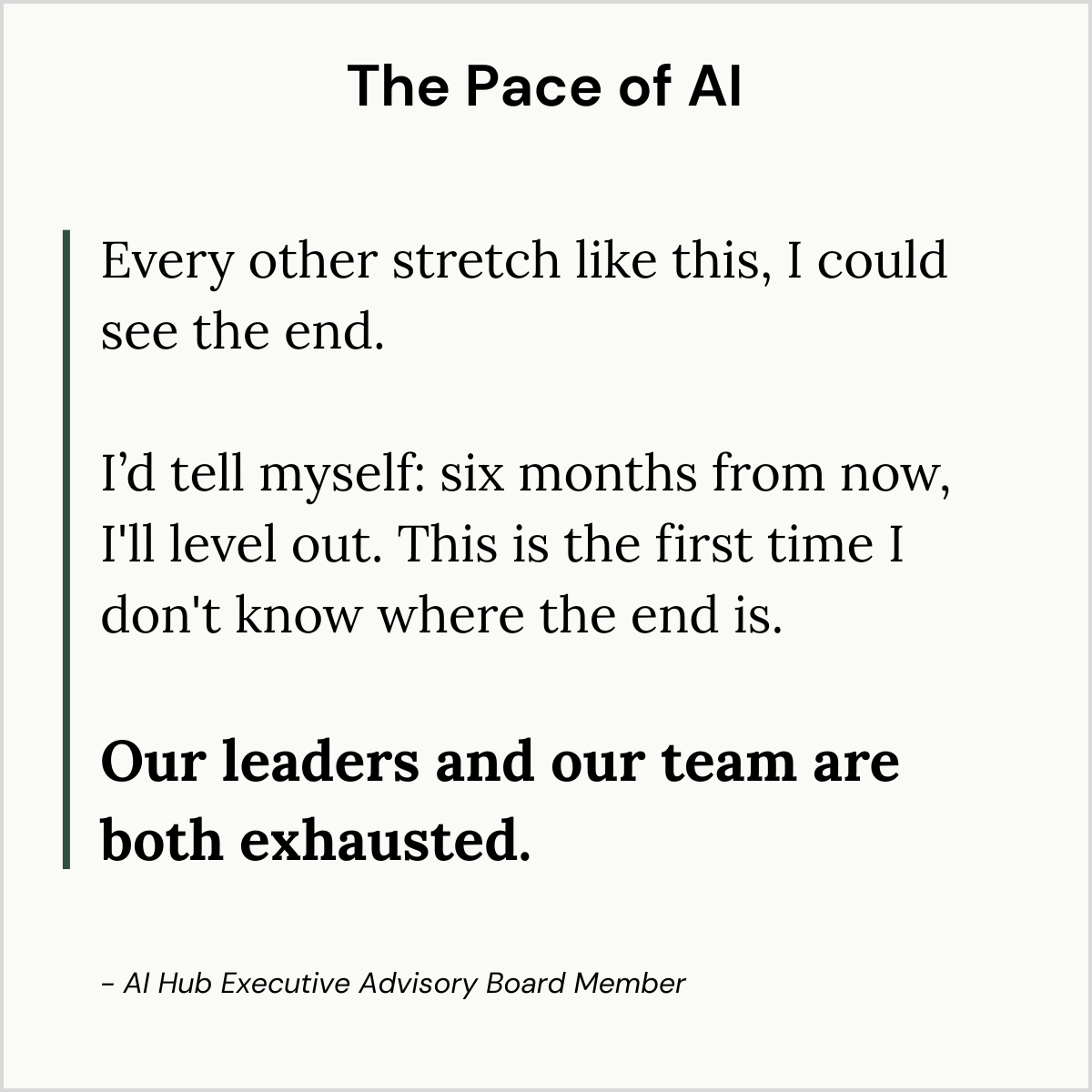
AI was supposed to give us time back. One speaker described it as eliminating “pajama time”: unplanned work that gets tackled at night or on weekends. But for executives AI isn’t reducing pajama time, it’s multiplying it. And it’s making them busier, more stressed, and more annoyed along the way.
We don’t know where this ends. There’s no earnings report, no deal close, no system go-live. And the technology keeps shifting; the systems we’re deploying today will be different next month.
I’ve learned a lot about endurance from fourteen marathons and four Ironmans. When it gets tough, the strategy comes down to one thing: don’t worry about the finish, just run the next mile.
But this race is different. There’s no map, no clock, no finish line. Endurance helps, but it’s not enough.
The most successful leaders aren’t the ones who can tolerate the uncertainty best. They’re the ones who’ve stopped looking for a map and are drawing their own.
Dad Joke: Why did the morgue employee want to be CEO? So he could have a coroner office. 😂
Very interesting insight into the real world of AI in business